TLDR
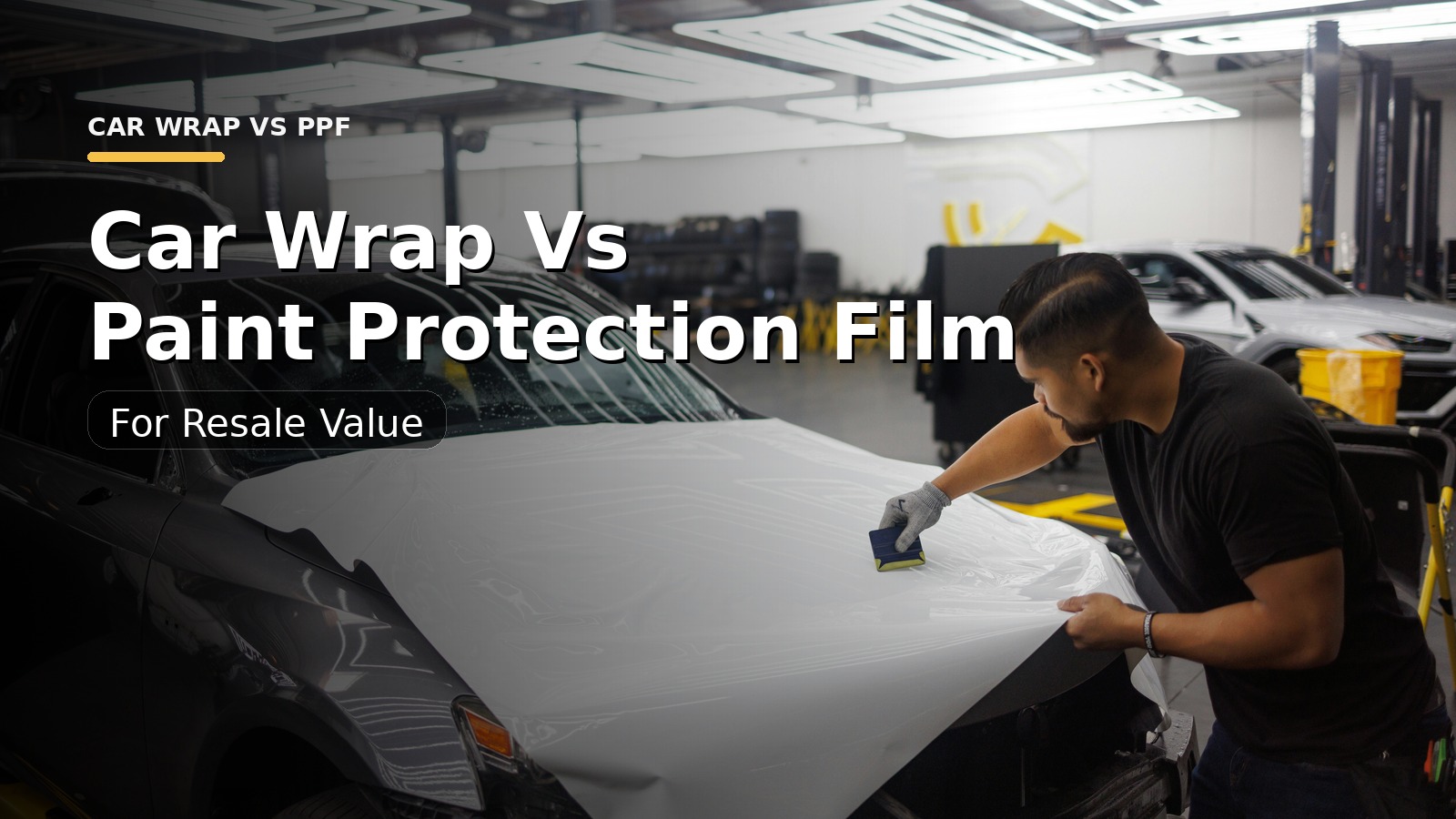
Paint protection film usually does more for resale value than a car wrap because it protects the factory paint from rock chips, scratches, bug damage and road debris.
A car wrap can help preserve paint in some cases, but it is mostly an appearance upgrade. It can also create buyer questions if the wrap is old, damaged, loud or hiding unknown paint condition.
For most owners, the best resale-minded choice is clear PPF on high-impact areas like the front bumper, hood, mirrors, fenders, rocker panels and door edges.
Introduction
Factory paint matters. A lot. When a buyer walks around a used car, the first things they notice are the chips on the bumper, scratches around the door handles, dull paint on the hood and any sign that the car has had cosmetic work.
That is why the car wrap vs paint protection film for resale value question comes up so often. Both options cover the paint. Both can change how a vehicle looks over time. But they do not do the same job.
Paint protection film, often called PPF or clear bra, is built to protect the original paint. Car wrap is usually built to change the color, finish or style of the vehicle. There is some overlap, but the resale result is different.
Here’s the honest answer: PPF is usually the better resale tool. A wrap can be useful, but it depends much more on taste, installation quality, removal condition and buyer trust.
Why Factory Paint Matters For Resale Value
Used car value is not just about mileage and service records. Condition plays a big role. A clean exterior helps a vehicle feel cared for, even before anyone opens the door or checks the maintenance history.
That does not mean a perfect front bumper magically adds thousands of dollars. It usually works the other way. Good paint helps prevent deductions.
Think of it like this:
A buyer expects normal wear. They do not expect a sandblasted bumper, deep hood chips, cracked clear coat or sloppy touch-up spots. A dealer also has to think about reconditioning cost. If the vehicle needs paint correction, bumper repair or panel work before resale, that cost often comes out of the trade-in offer.
That is where protection matters. The goal is not to “increase” the vehicle beyond its natural market value. The goal is to preserve the condition that supports a stronger trade-in value or private sale price.
What Paint Protection Film Does For Resale Value
Paint protection film is a clear urethane film installed over painted surfaces. It is designed to act like a sacrificial layer between the road and the factory paint.
For resale value, that matters most on areas that take abuse:
- Front bumper
- Hood
- Front fenders
- Side mirrors
- Rocker panels
- Door cups
- Door edges
- Trunk ledge
- Lower rear quarters
Those areas collect rock chips, bug stains, salt, sand, scratches and scuffs. On many cars, the front bumper looks older than the rest of the vehicle after only a few years of daily driving.
PPF helps because the damage hits the film first. A good film can reduce visible chips and keep the original paint underneath in better condition. Many modern films also have self-healing properties for minor swirl marks and light scratches.
From a resale perspective, the best part is simple: clear PPF does not change the car’s identity. A buyer still sees the factory color. The car still looks original. The protection is usually a quiet bonus, not a style decision the next owner has to agree with.
What A Car Wrap Does For Resale Value
A car wrap is usually a vinyl film installed over the vehicle to change its color, finish or branding. Wraps can be gloss, matte, satin, chrome, textured, printed or custom-designed.
A wrap can protect paint from some surface wear. It can reduce exposure to sun, light scratches and minor contaminants. But vinyl wrap is not the same as PPF. It is generally thinner and not designed for the same level of impact protection from road debris.
For resale value, a wrap can help in a few situations. It may keep the original paint cleaner while the wrap is in good shape. It may also make a car stand out to the right buyer. A clean, tasteful wrap on a well-maintained enthusiast car can create interest.
But there are risks.
A buyer may wonder what is underneath the wrap. Is the paint clean? Are there chips? Was the wrap installed over repaired panels? Will removal damage weak paint? Is there adhesive residue? Is the color too personal?
That does not mean wraps are bad. It means a wrap is more subjective than PPF. The same matte purple wrap that one buyer loves may make another buyer walk away.
Car Wrap Vs Paint Protection Film For Resale Value
Here is the clean comparison.
| Category | Paint Protection Film | Car Wrap |
|---|---|---|
| Main Purpose | Protect factory paint | Change color, finish or design |
| Best Resale Benefit | Preserves original paint condition | May preserve paint if installed and removed correctly |
| Buyer Reaction | Usually positive if clean and documented | Depends on taste and trust |
| Rock Chip Protection | Stronger | Limited |
| Appearance Change | Usually clear or subtle | Can be dramatic |
| Risk At Sale | Old, yellowed or damaged film can hurt appearance | Buyer may worry about hidden paint issues |
| Best Use Case | Newer cars, luxury cars, sports cars and daily drivers | Style changes, branding or temporary color changes |
For resale value, PPF is the safer recommendation. It solves a problem most buyers understand: protecting the original paint.
A wrap is better when the owner wants a different look while they own the car. It may help preserve the paint, but it is not as straightforward as a resale investment. More at UtCarWraps.com
The Biggest Resale Mistake: Installing Protection Too Late
PPF works best when it goes on early. Ideally, that means shortly after buying the car, before the bumper and hood are covered in chips.
Installing PPF over already damaged paint can still prevent more damage, but it does not erase the old damage. In some cases, film can make existing chips more noticeable because the surface becomes glossier and cleaner around them.
The same idea applies to wraps. A wrap installed over rough paint, peeling clear coat or bad bodywork can look worse over time and may be harder to remove cleanly.
The best resale-minded order is:
- Start with clean factory paint.
- Correct minor defects if needed.
- Install PPF on high-impact areas.
- Keep documentation.
- Maintain the film properly.
- Inspect the film before selling.
This is not the most exciting advice. But it is the kind that saves real headaches later.
Full Front PPF Is Often The Sweet Spot
Full body PPF gives the most complete protection, but it is not always the best resale-value decision for every vehicle. It can be expensive, and not every car has enough resale upside to justify full coverage.
For many owners, full front PPF is the better middle ground. That usually includes the full front bumper, full hood, front fenders and mirrors. Some packages also add headlights, rocker panels or door cups.
This protects the areas most likely to show obvious wear. It also keeps the cost more realistic than wrapping every painted panel.
Full body PPF makes more sense on high-value vehicles, rare colors, collector cars, performance cars, luxury SUVs and cars where original paint condition is a major part of the buying decision.
For a normal daily driver, the smart play is usually targeted coverage.
When A Car Wrap Can Help Resale
A car wrap can support resale value when it is used carefully.
The best-case scenario looks like this: the car had good original paint, the wrap was installed by a professional, the wrap was maintained well, the color is tasteful, the film is not past its useful life and the seller has photos showing the original paint before installation.
In that case, the wrap may reassure buyers that the paint has been protected. Or the seller can remove the wrap before listing the vehicle and show clean factory paint underneath.
A wrap can also help for commercial vehicles. Removing a branded wrap before resale can reveal paint that was protected from sun and light wear. That said, commercial wraps can leave ghosting or uneven paint aging if the vehicle spent years outside, so removal quality matters.
For personal vehicles, the resale-friendly wrap choices are usually subtle: gloss black roof, satin accents, factory-like color changes or clean neutral colors. Highly personal designs are harder to sell.
When A Car Wrap Can Hurt Resale
A wrap can hurt resale when it creates doubt.
Common problems include:
- Peeling edges
- Faded vinyl
- Cracked film
- Stained matte finishes
- Adhesive residue
- Poor seams
- Knife marks from installation
- Uneven color under the wrap
- Paint pull during removal
- A design that feels too personal
Even if the paint underneath is fine, a rough wrap makes the whole car feel neglected. Buyers often judge what they can see. If the wrap looks tired, they may assume the same about the rest of the vehicle.
There is also the hidden-condition problem. A buyer who cannot see the paint may discount the car mentally. They may ask for the wrap to be removed before purchase or offer less because they are taking on risk.
That is why documentation matters. Keep the original installation invoice, film brand, warranty information and photos of the paint before the wrap. If the wrap is still on the car when selling, those details help.
Documentation Helps More Than Most People Think
Protection is more valuable when the next buyer can trust it.
A folder of records does not need to be fancy. It should include:
- Installer name
- Installation date
- Film brand and product line
- Coverage areas
- Warranty card or registration
- Before photos if available
- Maintenance notes
- Removal records if the wrap or film was removed
This turns “it has PPF” from a vague claim into something a buyer can verify.
For a private sale, documentation can help justify your asking price. For a trade-in, it may not change the book value directly, but it can still support a cleaner condition rating and reduce reconditioning concerns.
Should You Remove PPF Or Wrap Before Selling?
If the PPF is clear, clean and in good condition, it usually makes sense to leave it on. Point it out during the sale and show the documentation.
If the PPF is yellowed, cracked, lifting or heavily scarred, it may be better to have a professional inspect it. Sometimes removal or replacement makes the car present better.
For wraps, the answer depends on the buyer pool. If the wrap is subtle and excellent, leaving it on can work. If the wrap is loud, aged or damaged, removing it before sale is usually smarter. Most used-car buyers want to see the actual paint.
Professional removal is worth considering. Pulling old film incorrectly can create adhesive problems or paint damage, especially if the paint was previously repaired or the film is past its service life.
Best Recommendation For Most Owners
For resale value, choose paint protection film over a car wrap if your main goal is preserving the vehicle’s original paint.
The best setup for most daily drivers is full front PPF with a few add-ons: rocker panels, door cups and door edges. This protects the spots that take the most abuse while keeping the car’s factory appearance intact.
Choose a car wrap if you want a different look while you own the vehicle. Just understand that the resale value depends on taste, condition and removal. A wrap is a style choice first and a paint-preservation tool second.
The simplest rule is this: PPF helps buyers trust the original paint. A wrap makes buyers wonder what is under it unless you can prove the paint is clean.
FAQs
Does PPF Increase Car Resale Value?
PPF usually helps preserve resale value rather than directly increasing book value. It protects the factory paint from common damage, which can help the vehicle present better during a trade-in or private sale.
Is A Car Wrap Good For Resale?
A car wrap can be good for resale if it is clean, professionally installed, well maintained and removed properly when needed. But it is more subjective than PPF because buyers may not like the color or may worry about hidden paint damage.
Is PPF Better Than Vinyl Wrap For Rock Chips?
Yes. PPF is typically the better choice for rock chip protection. Vinyl wrap can offer light surface coverage, but PPF is designed for stronger paint protection against road debris, scratches and impact wear.
Should I Wrap My Car Before Selling It?
Usually, no. Wrapping a car right before selling rarely makes sense unless the paint is already clean and the wrap strongly fits the target buyer. Most buyers prefer to inspect the original paint.
Should I Get PPF On A New Car?
If resale value and paint condition matter to you, PPF is easiest to justify on a new car. The cleaner the paint is when the film goes on, the more useful the protection is over the life of the vehicle.
What Areas Should I Protect First?
Start with the front bumper, hood, mirrors and front fenders. After that, consider rocker panels, door cups, door edges and trunk ledges. These areas see the most frequent wear from road debris and daily use.